
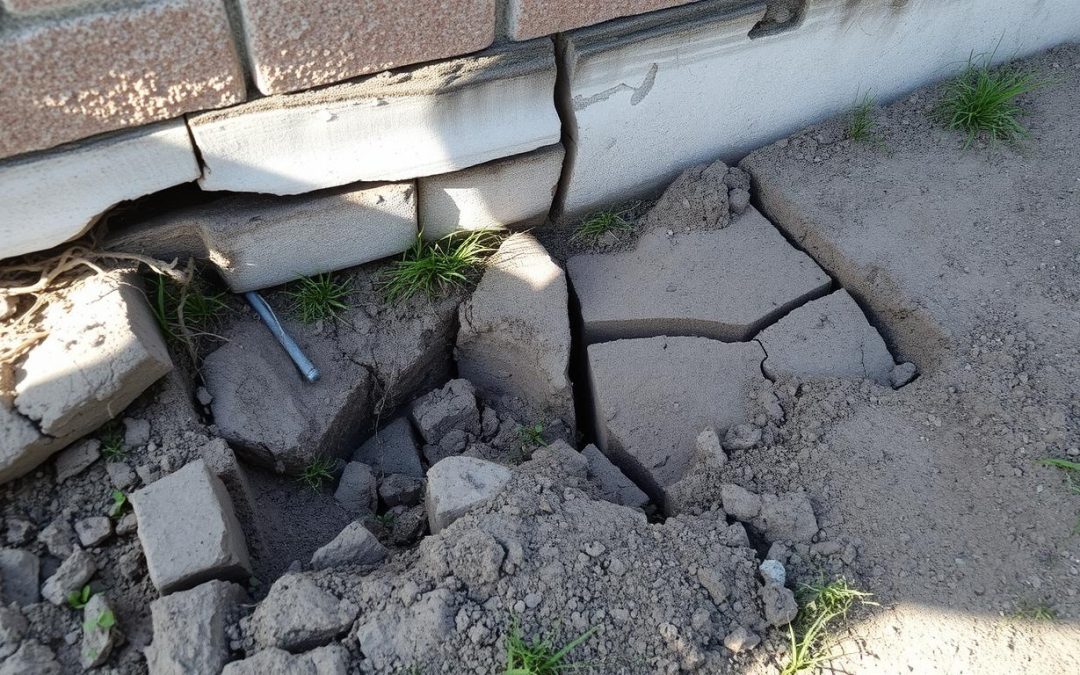
The foundation is the most critical component of any residential structure, responsible for supporting the entire weight of the building and its occupants. When cracks appear in this subterranean anchor, they often signal that environmental pressures or soil shifts are compromising the safety of your living environment.
Ignoring foundation distress can lead to a domino effect of architectural failures, from jammed doors to roof leaks and collapsed masonry. Understanding which fractures require an emergency response allows homeowners to intervene before a manageable repair turns into a catastrophic financial burden.
Identifying Wide and Expanding Gaps
Any crack in a foundation wall that exceeds one-quarter of an inch in width is a primary indicator of significant structural movement. These large openings suggest that the house is no longer resting on a stable base and is actively shifting away from its original position.
- Measure the width of the gap at its widest point and monitor it weekly for any signs of continued expansion.
- Look for “stairstep” patterns in brickwork or concrete blocks, which indicate the foundation is sinking at one corner.
- Insert a simple toothpick or gauge into the crack to see if the house is pulling apart or compressing inward.
Wide fissures act as direct conduits for groundwater and pests to enter the crawlspace or basement. Once a gap reaches this size, the mechanical bond of the concrete is broken, and the wall loses its ability to distribute weight evenly.
Recognizing Horizontal Pressure Fractures
While vertical cracks are often caused by minor settling, horizontal cracks are almost always a sign of severe hydrostatic pressure from the surrounding soil. This occurs when wet earth expands against the foundation wall, pushing it inward and threatening a total structural collapse.
- Check for “bowing” or inward curving of the basement walls along the line of the horizontal fracture.
- Inspect the exterior grading to see if water is pooling against the foundation and increasing the soil weight.
- Note if the crack appears mid-way up the wall, which is the typical point of maximum pressure from saturated earth.
A horizontal break is a high-priority emergency because it indicates that the wall is failing under a lateral load. If left unbraced, these walls can buckle suddenly, leading to the loss of the entire structural support for the floors above.
Detecting Active Water Infiltration
A foundation crack that is actively leaking water requires immediate repair to prevent mold growth and the rot of wooden floor joists. Even a slow “weeping” crack can lead to thousands of dollars in water damage and a compromised indoor air quality.
- Watch for damp spots, efflorescence (white salty powder), or standing water near the base of the foundation wall.
- Listen for trickling sounds behind finished basement walls during or after a heavy American rainstorm.
- Check for a musty odor, which often signals that water is trapped within the wall cavity or the insulation.
Moisture entering through a crack also accelerates the corrosion of the steel rebar hidden inside the concrete. Once the internal reinforcement begins to rust, it expands and cracks the concrete from the inside out, doubling the damage.
Evaluating Multiple Converging Cracks
If you notice several cracks originating from a single point, often near a window or door corner, the foundation is likely experiencing “differential settlement.” This means one part of the home is sinking much faster than the rest, creating intense diagonal tension.
- Inspect the upper floors for drywall cracks, sticking windows, or sloping floors that align with the foundation issues.
- Look for “V-shaped” cracks that are wider at the top than the bottom, suggesting a downward pull on the slab.
- Monitor exterior chimneys to ensure they are not leaning away from the main structure of the house.
Converging cracks indicate a complex failure that usually involves the deep subsoil beneath the footing. When the house begins to pull itself apart in multiple directions, the structural integrity is at its highest risk.
Assessing the Impact of Foundation Shearing
Shearing occurs when the bottom of a foundation wall stays in place while the top moves, or vice versa, creating a jagged shift in the masonry. This physical misalignment means the load-bearing capacity of the wall has been fundamentally compromised.
- Look for “offsets” where one side of the crack is physically protruding further than the other.
- Check the alignment of the sill plate—the wooden beam resting on the concrete—to see if it is still flush with the wall.
- Watch for cracks that run through the actual aggregate or stones in the concrete, rather than just the cement paste.
Shearing is a definitive sign that the foundation can no longer support the weight of the home safely. Immediate structural stabilization, such as piering or carbon fiber reinforcement, is usually necessary to prevent a total loss.
Securing Your Property’s Architectural Integrity
Addressing foundation failures the moment they appear is the only way to guarantee the long-term safety and value of your home. A proactive approach to masonry repair prevents the progressive damage that can make a residence unlivable and unsellable.
Investing in a professional evaluation today ensures that your home remains a stable sanctuary for your family for generations to come. By treating foundation health as a priority, you safeguard your largest financial asset against the unpredictable forces of nature.